
Engaging Schools for Community Participation
For a group of Year 12 Vocational Major students, volunteering stopped being something you talk about and started being something you do.
Not sitting around a table.
Not ticking a box.
Real work. Real responsibility. Something that would last.
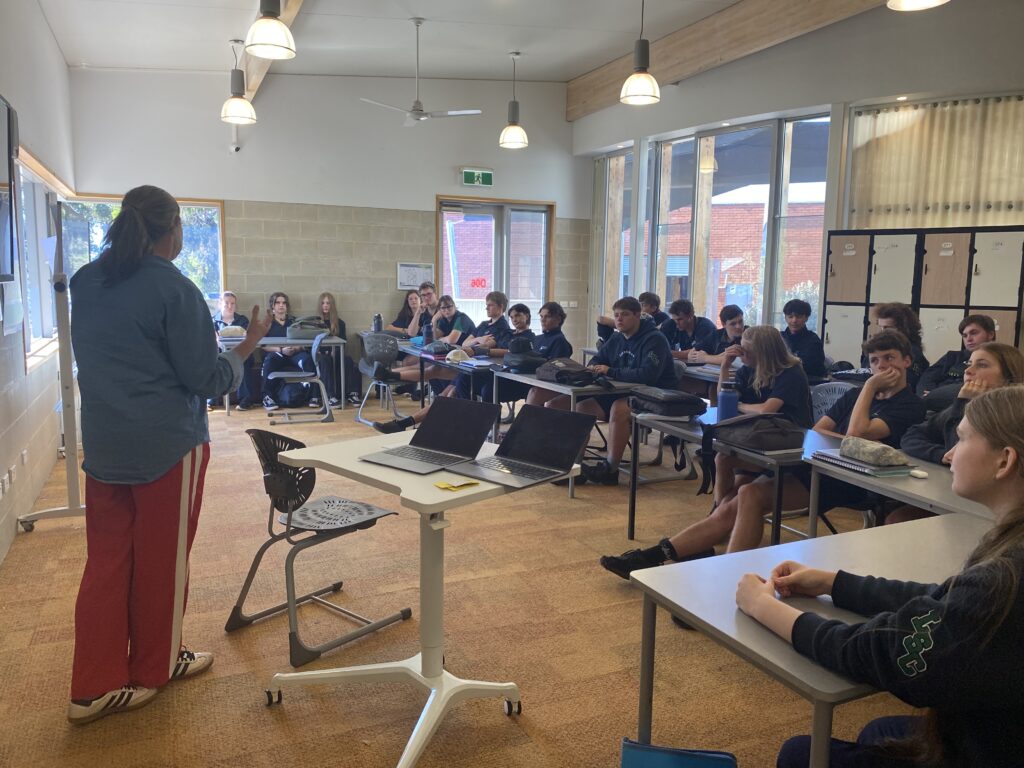
Beside the maternity wing at Gippsland Southern Health Service sat a garden with potential. With support from Volunteer Gippsland, students from Leongatha Secondary College stepped into a role that asked more of them than participation. It asked them to lead.
Creating the opportunity
Volunteering was embedded into the students’ learning, not added on. The project formed part of their Vocational Major program, designed to prepare young people for life beyond school through hands-on, applied learning.
Students worked alongside hospital staff, community volunteers, and local organisations to design and regenerate the maternity garden. They researched plants, developed project plans, raised funds, and made decisions together.
As one student explained:
“It’s hands-on and fun. You’re not sitting around a table doing nothing, you’re actually involved. I wanted to grow my skills and leave a mark.”
Watch the story unfold
This video captures the voices of students, volunteers, educators, and health staff, showing what happens when young people are trusted with responsibility and supported to contribute in meaningful ways.
From uncertainty to confidence
For many students, this project marked a turning point.
There can be stigma attached to Vocational Major pathways, and some students spoke openly about feeling underestimated. Early on, a number of students were quiet, unsure, and hesitant to step forward.
Six months later, those same students were presenting to hospital leaders, leading conversations, coordinating tasks, and making decisions together.
One educator reflected:
“I saw students who, six months earlier, would never have done what they did. That’s what this project is all about.”
Students felt the shift too.
“You actually have to include stuff. You’re not just doing nothing. It made me want to push myself and get better.”
Learning alongside community volunteers
Community volunteers played a crucial role, not by taking over, but by standing alongside students.
Volunteers with expertise in plants, landscaping, and construction worked directly with students, sharing knowledge while respecting student ideas and leadership.
“We met volunteers with expertise in plants. They taught us what would work best, but they also trusted our ideas.”
This intergenerational exchange created a shared sense of ownership. Students learnt that volunteering is about contribution, collaboration, and responsibility, not just helping out.
A space transformed and a community impact felt
As the garden took shape, its impact became visible across the hospital.
Health service staff described families pausing in the space, looking out from windows, sitting together, and connecting with something created by local young people.
“You can feel the energy before they even walk in the door. That’s really nice for a health service as well.”
In a maternity setting, the garden became more than a physical space. It became part of the care environment, supporting wellbeing through connection with nature.
What made this work
This project did not succeed by chance. It worked because volunteering was intentionally designed.
What made this work
These elements created the conditions for people to step up with confidence and pride.
Impact at a glance
For students
For the community
For the future
Thinking about legacy
Students were not just focused on completing the project. They were thinking about what would come next.
“It’s not just a project that finishes at the end of the year. Other students can get involved, and it can keep going.”
Long after students leave school, the garden will remain. More importantly, so will the confidence, capability, and sense of belonging built through creating it.
The role of Volunteer Gippsland
Volunteer Gippsland supported the partnerships, structure, and volunteer design that made this project possible. By aligning learning, community need, and inclusive volunteering practice, Volunteer Gippsland helped create the conditions where young people could step up and succeed.
What was built here is more than a garden. It is confidence, capability, and a sense of belonging that will stay with students long after they leave school.
Want to create something like this?
If you are a school, volunteer manager, or community group looking to create volunteering opportunities that empower young people and strengthen community connection, Volunteer Gippsland can help.